
Strategy
10 min.
Marketing for Car Dealerships and Sports Car Dealers: How Premium Dealers Win Buyers Today
Leon Woo
·
·
With figures from our mandate for Alpine Sportwagen Düsseldorf.
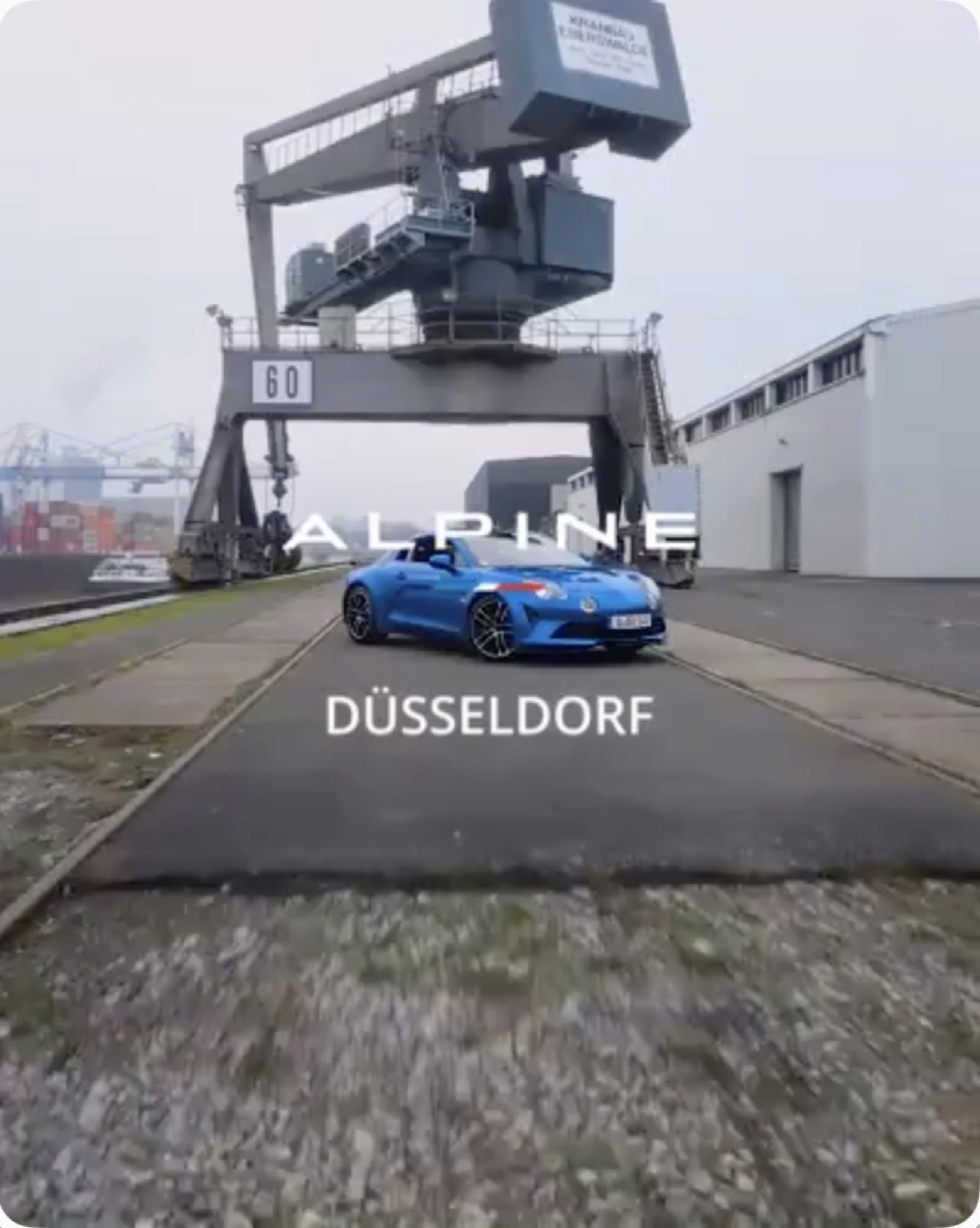
No product sells itself quite as much through emotion as a sports car — and hardly any industry markets itself digitally as emotionlessly as the car dealership trade. Classifieds, price lists, an orphaned Instagram channel with frontal photos from the yard: this is what the marketing of most dealerships looks like, while the purchasing decision has long since been made elsewhere — in the feeds where cars are driven, heard, and experienced.
This guide shows how premium and sports car dealers can exploit this gap: with content that stages vehicles instead of just showing them, a showroom that becomes a studio, and an inquiry funnel that turns reach into test drives. Featuring real numbers from our mandate for Alpine Sportwagen Düsseldorf — including a video that reached 337,000 people.
Why traditional car dealership marketing misses the premium buyer
The traditional marketing mix of car dealerships — classifieds, print ads, open-house events — is built for the inventory buyer: they know what they want and compare prices. The premium and sports car buyer works differently. They are not buying a means of transportation, but making a decision about themselves — and this decision matures over months: they follow brands and dealers, watch driving videos, configure cars at night, discard, and come back. When they finally request a test drive, the decision has already been largely made.
The consequence: those who only become visible on classifieds end up competing solely on price at the end of the journey. Those who are present during the journey — with staging, personality, and trust — are no longer compared at all. This is the same logic we know from marketing for private clinics: long decision journey, high ticket size, trust-based purchase. The tools are transferable.
Short-form video is the showroom entered by 337,000 people
No channel showcases a vehicle like short-form video: sound, acceleration, light reflections on the paint, the customer's face during handover. That is exactly what you cannot get with a smartphone photo from the yard — and that is exactly why the gap is so large.
What is realistically possible: For Alpine Sportwagen Düsseldorf, we developed a content campaign consisting of showroom clips, driving scenes, and customer moments. The centerpiece — a single video — reached 337,000 people, 7,950 likes, and 104 positive comments: more people than will ever enter a showroom of the brand, reached with motorsport emotion instead of an advertising budget.
The three content pillars for dealers
Vehicle staging: Walkarounds with sound, driving footage, detail shots — dynamically edited, not just filmed. Every special vehicle in stock is an episode.
The showroom as a stage: Deliveries, detailing, handovers — the daily routine of a sports car dealer is content that other industries would have to spend heavily to stage.
People and moments: Customer handovers (with consent), the team, the community — emotion connects, and the buyer of the day after tomorrow is already following today.
The key is system over spontaneity: a fixed shooting day per month, from which the entire month of content is created — the same production rhythm we use to serve clinics and law firms.
From view to test drive: the inquiry funnel
Reach without a funnel is just entertainment. Between the video and the sales contract lie three steps that most dealers leave to chance.
1. The Google foundation
For "brand + city" searches, the Google Business Profile is key: complete, with up-to-date vehicle and showroom photos and an active review collection process. Car dealership reviews are critical to buying decisions and are almost never systematically built up — the process is the same as everywhere else: ask personally at the right moment, make the process simple.
2. The website as a conversion point
Not a clone of classifieds, but: staged vehicles (video embedded!), the team visible, financing and leasing options outlined, and a low-threshold way to a test drive on every page. WhatsApp beats the contact form — for an €80,000 vehicle just as much as for an €8,000 medical treatment.
3. The test drive funnel
A structured inquiry (model → timeframe → buying intent → contact) pre-qualifies and turns a "just looking" user into an appointment with context. Retargeting video viewers and website visitors addresses the long decision-making journey: anyone who has watched the driving video three times is no longer a stranger.
What premium dealers can learn from regulated industries
An angle you won't find in any car dealership guidebook: the discipline forced by regulated industries also makes dealer marketing better. Verifiable statements instead of superlatives ("the best price", "the largest inventory" — vulnerable and interchangeable), pricing clarity (leasing and financing examples with clean mandatory disclosures instead of bait-and-switch pricing — mandatory fuel consumption and emission data belong in every ad anyway), and documented consents for customer videos. We come from marketing for doctors and clinics, where every statement must withstand strict advertising laws — this care is not a disadvantage in retail, but what separates premium from market shouting.
Case Study: Alpine Sportwagen Düsseldorf
Alpine stands for motorsport DNA, lightweight construction, and driving pleasure — Alpine Düsseldorf stands for performance and exclusivity in the Rhineland. Our task: digital brand staging that brings this experience into feeds. Execution: a content campaign made of authentic showroom clips, driving scenes, and customer moments, embedded in a content ecosystem along the customer journey, flanked by a corporate design of dark color worlds and futuristic typography. The result: 337,000 people reached, 7,950 likes, 104 positive comments — reach and resonance that opened the showroom far beyond Düsseldorf.
→ To the complete Case Study: Alpine Sportwagen Düsseldorf
Frequently Asked Questions
Is social media worth it for a small car dealership?
Especially then: short-form video is the only channel where an owner-operated dealer with personality and special vehicles can organically reach more people than a franchise chain with a larger budget. The prerequisite is a fixed production rhythm — not the occasional smartphone photo.
Which channel brings inquiries the fastest?
Google Business Profile plus reviews work in a matter of weeks; paid campaigns targeting a test drive funnel deliver from day 1 — but only convert if the website and inquiry path are set up. Content and reach build up over three to six months and permanently reduce dependence on classified portals thereafter.
Do we still need classified portals then?
Yes — as a sales channel for the comparison buyer ready to purchase. But every inquiry that comes through your own reach is commission-free, more price-stable, and brand-building. The goal is not replacement, but a second, independent pillar.
How much does professional marketing cost for a car dealership?
From a lean content system (one shooting day per month) to a full setup with funnels and ads, the scope is variable. The math is simple in retail: the margin of a single additionally sold vehicle per month against the system costs. For guidance: at UNITED, cooperation starts from €3,000 monthly.
Your inventory deserves more emotion than a classified photo
In a free initial consultation, we will analyze your visibility, your appearance, and your inquiry funnel — and show you, using the Alpine example, what brand staging can look like for your location. Book a consultation.
You can find more of our work under Clients; what such an appearance looks like as a program is described in Brand Refresh.
Leon Woo
UNITED Digital Agency — specialized in brand building and patient acquisition in the premium medical sector.